Author: Hassan Feissali

  • Why Window Hero Launched Swindon’s First All-Electric, window cleaning setup

    Why Window Hero Launched Swindon’s First All-Electric, window cleaning setup

    Below is our official company announcement detailing our zero-emission operations and digital-first property maintenance across Wiltshire and the Thames Valley. (As featured in the Swindon Advertiser)

    When I founded Window Hero, I wanted to build something different: a trade service that combines high-standard property maintenance with zero local environmental impact and zero booking friction.

    Before launching Window Hero, my career looked a bit different—spending over a decade in the Civil Service as a digital Quality Assurance (QA) auditor. Transitioning from behind a screen to exterior home and commercial maintenance might seem like a leap, but the core principles remain the exact same: meticulous attention to detail, reliability, and an absolute commitment to quality standards.

    Cutting Emissions, Not Corners

    Traditional trade services often rely on heavy diesel vans idling outside properties during every local stop. To change that, Window Hero operates an entirely electric vehicle setup across Swindon, Bristol, Reading, and the wider Thames Valley.

    By eliminating tailpipe emissions entirely, we keep our local carbon footprint as light as possible while delivering pure-water exterior cleaning for residential and commercial properties. Pure-water cleaning uses de-ionized water that dries completely spot-free without needing chemical detergents, protecting your window frames, sills, and local gardens.

    Bringing GDS Standards to Home Maintenance

    Homeowners often tell us that dealing with traditional window cleaners involves one major frustration: waiting days just to get a simple quote or trying to coordinate schedules over the phone.

    Applying my background in digital accessibility—including work shaped by UK Government Digital Service (GDS) usability standards—we built a custom online estimator. Local property owners can generate an instant, transparent price in under a minute directly on our website, completely removing the administrative back-and-forth.

    “Traditional trade services often suffer from two major issues: high-emission diesel vehicles idling outside properties, and outdated booking systems that leave customers waiting,” says Hassan, Founder of Window Hero. “I wanted to apply the same discipline I used in software auditing to build a service that is completely frictionless for the client while keeping our local environmental footprint clean.”

    Looking Ahead

    We are proud to bring a cleaner, tech-driven approach to exterior maintenance across Swindon, Bristol, Reading, and surrounding areas. Whether you manage a commercial property or want sparkling clean windows at home without the environmental guilt, Window Hero is built to make the process effortless from click to clean.

    Ready to see what a modern, eco-friendly trade service looks like? Get an instant online estimate in under a minute.
  • Clean Solar Panels to Stop Lichen, Not for Extra Kilowatts

    Clean Solar Panels to Stop Lichen, Not for Extra Kilowatts

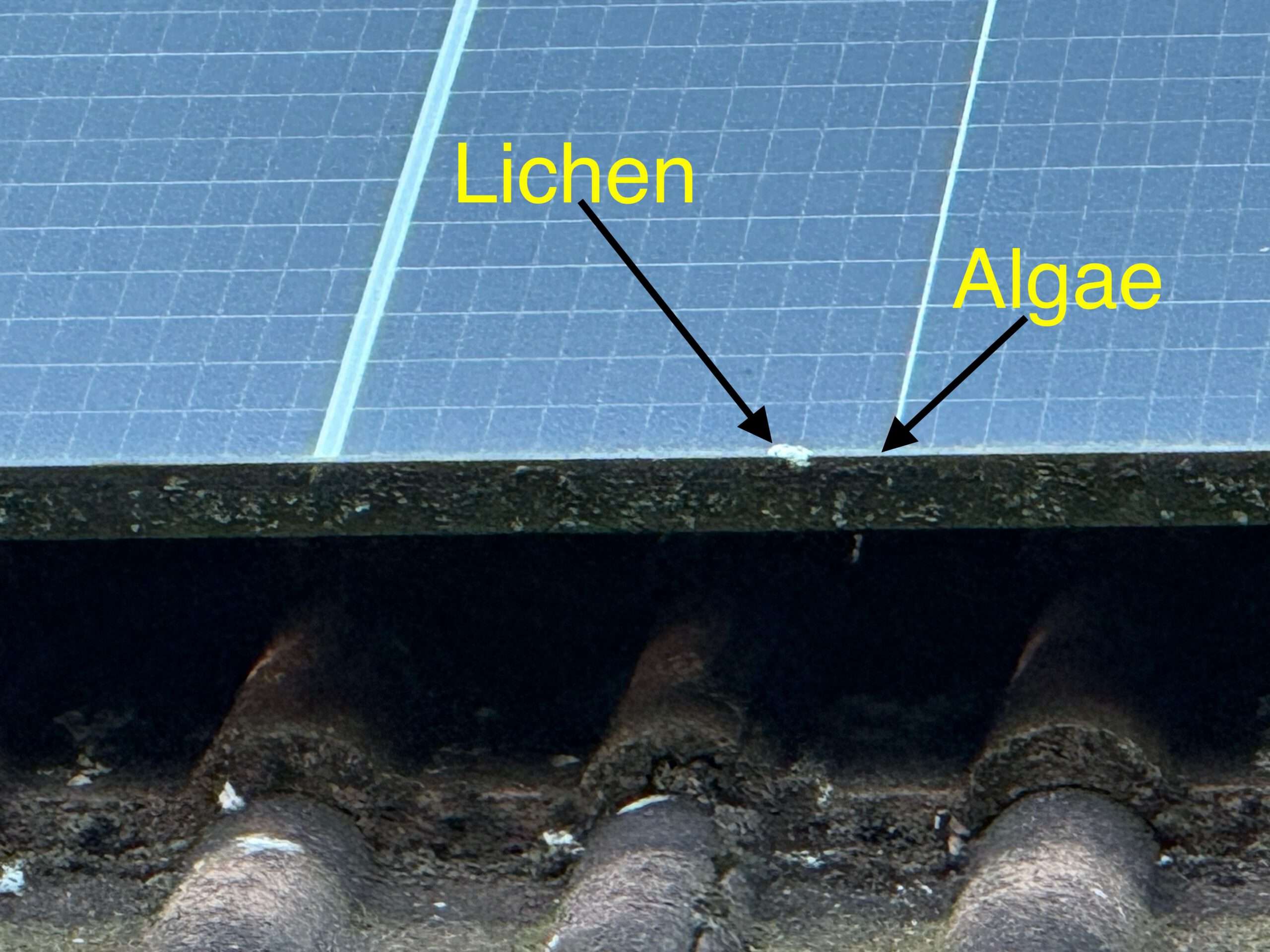
    At Window Hero UK, we often get calls from homeowners who are frustrated that their solar panels are covered in patches of green, grey, or white growth. Many are confused as to why this has “suddenly” happened, especially after being told their panels were “maintenance-free”. The truth is that these patches are not simple dirt or bird droppings—they are lichens, and they damage solar panels.

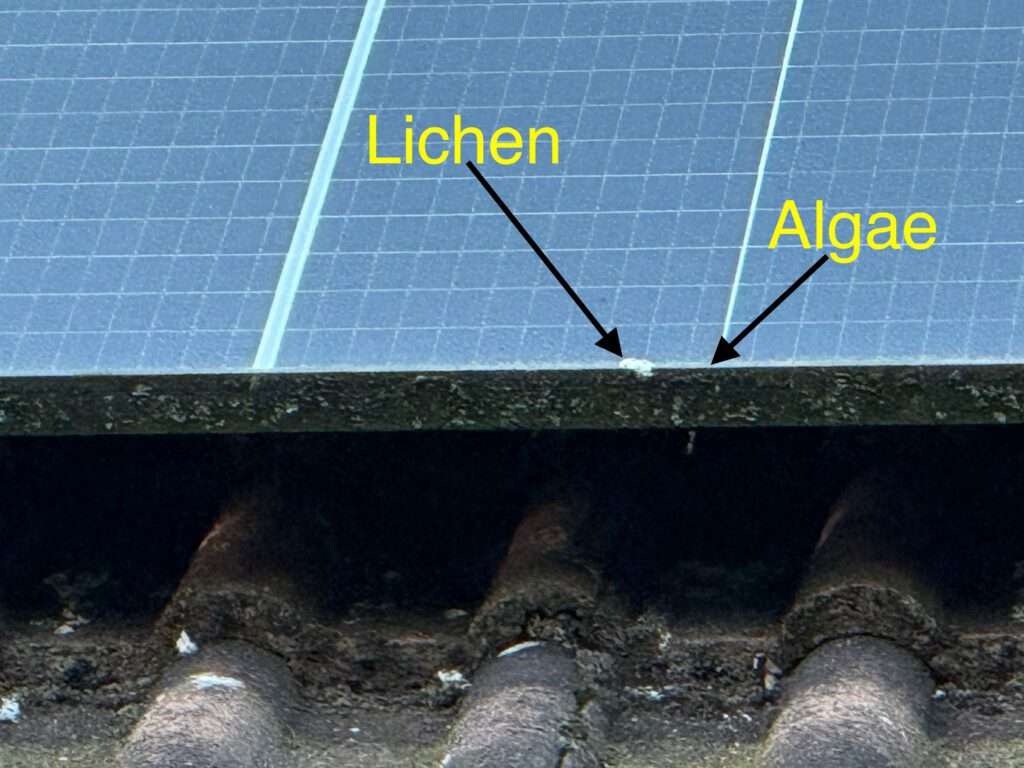
    Lichen on solar panels

    What is Lichen?

    A lichen is an organism but it is not a single organism. As defined by the British Lichen Society, a lichen is “a stable symbiotic association between a fungus and algae and/or cyanobacteria”. In this partnership, the fungus provides the protective structure, while the algae (called photobionts) produce food through photosynthesis. The British Lichen Society notes that this symbiosis is thought to be a mutualism, as both partners benefit from the arrangement.1

    The Algae Gateway

    The most common question we hear from homeowners is, “Why has this happened so suddenly?” The answer lies in the biology of the lichen itself.

    Lichen doesn’t just appear from nowhere. It requires a foundation. That foundation is algae. Algae are nature’s most prolific organisms. On a microscopic level, the smooth surface of a solar panel is actually quite rough, perfect for trapping dust, moisture, and microscopic algae spores. In the early stages, this algal growth can be invisible to the naked eye, only becoming visible once a green film appears on the panel.

    This film of algae creates the perfect nursery for the lichen. When fungal spores land on this established algal base, they begin forming the symbiotic relationship we recognise as lichen. Therefore, Algae comes first, lichen follows.

    The Costly Reality: Why Lichen is a Problem

    Once lichen establishes itself, it bonds very strongly to the glass, making it extremely difficult to remove even with specialist equipment. Unlike dust, it won’t wash away with rain. In many cases, even after a professional clean, you’re often left with a permanent ‘ghost’ mark etched into the panel.

    The Efficiency Myth: Why Clean?

    Many people believe the primary reason to clean solar panels is to boost their electricity output. However, the financial reality often tells a different story.

    A study conducted by engineers at the University of California, San Diego, and published in the journal Solar Energy found that panels which had not been cleaned for 145 days during a summer drought in California, lost only 7.4% of their efficiency 2. For a typical home system, the small gain in electricity production from a professional clean does not usually offset the cost of the cleaning service itself.

    Therefore, you should not clean your solar panels primarily to chase a few extra kilowatt-hours of electricity. The modest financial gain rarely justifies the expense.

    The Real Reason for Cleaning: Prevention

    The real, compelling reason to clean your panels is preventative maintenance. You are not cleaning to boost output; you are cleaning to prevent the establishment of algae, which is the gateway to an expensive lichen infestation.

    The moment you see any sign of green or dark film on the glass (the algae), you should act. At this stage, the solution is simple. A soft-bristled brush can easily and safely remove the algae before the lichen gets a chance to establish itself.

    Conclusion: Don’t Wait

    Your solar panels are designed to last for decades. Ignore the advice that panels are maintenance-free. Ignore the belief that a good rain shower will sort them out. Rain does not clean algae, and algae is the prerequisite for lichen.

    If you spot algae, hire a professional to give them a gentle, safe clean. This small, occasional expense is the most effective insurance policy you can buy against the damaging problem of lichen.

  • How to Do Gutter Cleaning

    How to Do Gutter Cleaning

    Gutter cleaning is nobody’s idea of a fun weekend. But ignoring it can lead to damage to your house. The good news? With a few smart techniques and the right safety gear, the job goes from miserable to manageable.

    A lot of articles online give vague advice like “be careful on ladders” or “scoop out the leaves.” That’s not helpful. Here’s what actually works, based on real DIY experience—no fluff, no dangerous shortcuts.


    Ladder Safety That Actually Matters

    Most gutter injuries happen because the ladder moves or is at the wrong angle. Fix that first.

    The 4:1 rule: Place the ladder base 1 foot away from the wall for every 4 feet of ladder height. For a two-story home, that’s roughly 3–4 feet out from the wall. Too steep and you’ll tip backward; too shallow and the base slides out.

    Secure the bottom – the firefighter method: Tie a rope to the lowest rung of the ladder. Run the rope forward – away from the wall – and tie it off to a heavy anchor. The rope prevents the ladder from slipping backward away from the wall. Firefighters use this technique because it’s simple and effective.

    Three points of contact: Always keep either both feet and one hand, or both hands and one foot, on the ladder. That means no carrying tools in your hands while climbing. Use a tool belt, a bucket with a rope, or have a second person hand you what you need when you’re stable.

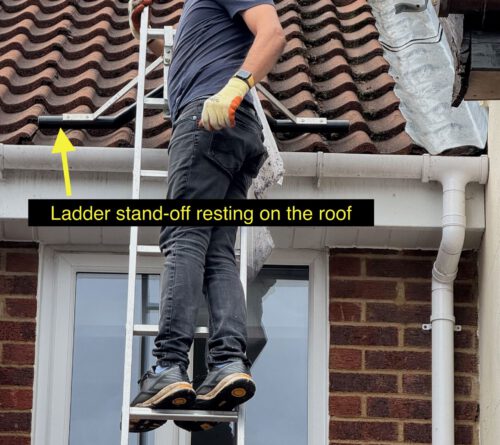
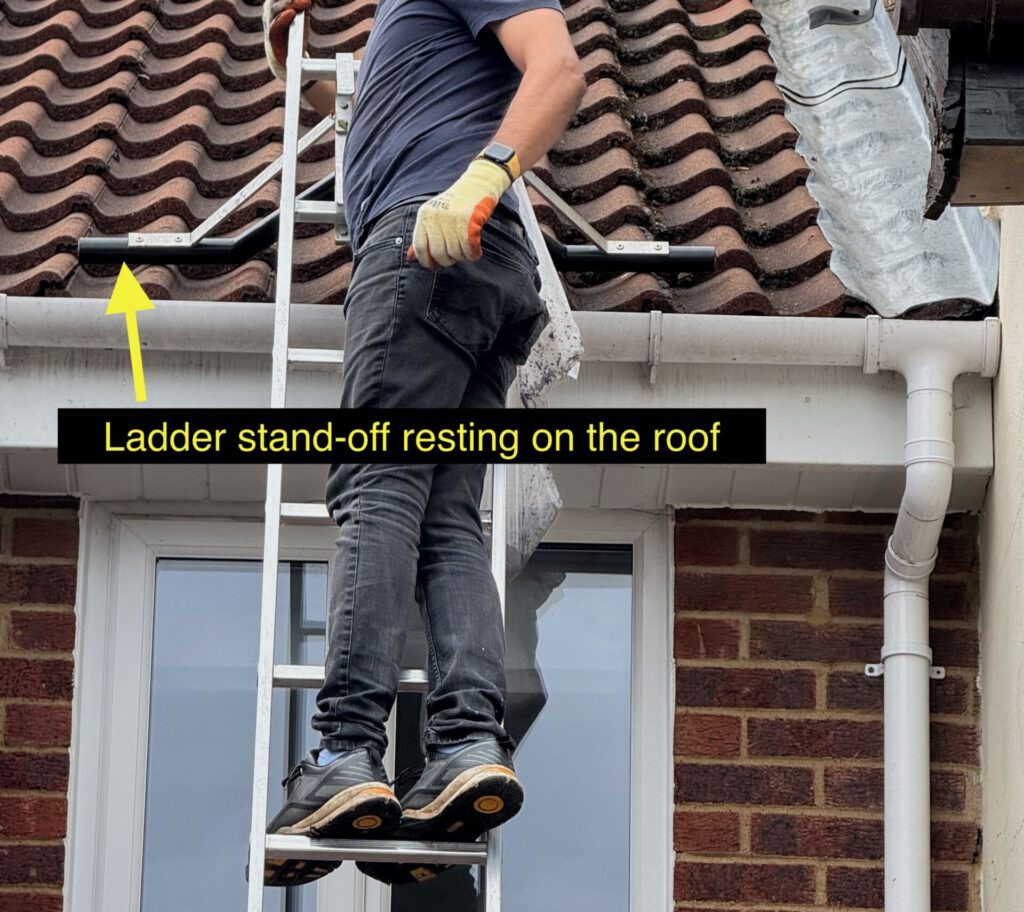
    Get a ladder stand-off: This ladder accessory gives you several inches of clearance so you’re not leaning over or fighting the gutter. Depending on the product, you can place it either under the gutter (resting on the wall) or above the gutter on the roof tiles – always follow the safety instructions that come with your stand-off.

    Ladder stand-off

    No stand-off? Then you have to make a choice: rest the top of the ladder on the gutter itself or on the fascia board behind the gutter. The fascia is usually sturdier, but check that it’s not rotten before climbing.


    Cleaning Without Breaking Safety Rules

    Why not a leaf blower on a ladder? You’ll see online videos of people using a cordless leaf blower from the top rung. That almost always breaks the three-points-of-contact rule – you need two hands to aim the blower, leaving only your feet on the ladder. Don’t do it.

    From the ladder (safely): Climb empty-handed, then have a helper hand you a small trowel or gutter scoop. Scoop debris into a bucket hanging from the ladder or on a tool belt. Keep one hand on the ladder or stand-off at all times. After scooping, use a garden hose to flush the gutter – the hose is lightweight and can be operated one-handed.


    Test and Clear the Downpipes

    After the gutters are clean, run a garden hose into the downpipe entrance. If water drains slowly, you’ve got a blockage.

    If the downpipe is blocked try a sink unblocker tool. Feed it down the pipe from the top, twist, and pull up. They’re surprisingly effective at snagging leaves and moss.

    Drain unblocker coil

    A Final Word

    Set up your ladder safely – 4:1 rule, bottom secured with the firefighter rope method, three points of contact always. Use a stand-off if you have one. Skip the leaf blower on the ladder as it’s risky. Instead, scoop by hand from a stable position. Test your downpipes with a hose, and keep a sink unblocker tool handy.

    Once you’ve done it this way, you’ll be done in under an hour – and you’ll still have intact bones. Your gutters (and your future self) will thank you. If you have any questions feel free to get in touch with us.

  • Is Window Cleaning a Slip-hazard in Sub-zero Temperatures?

    Is Window Cleaning a Slip-hazard in Sub-zero Temperatures?

    During the winter months, especially when temperatures drop below zero, people wonder whether window cleaning is still safe. One of the most common concerns we hear from homeowners is about ice forming on the ground outside the house after the windows have been cleaned.

    It’s a sensible question — and the honest answer is that it can be a safety risk if it’s not handled properly.

    Window cleaning involves water, and when it’s freezing outside, any water that lands on a driveway, patio, path or pavement can quickly turn to ice. Even a thin, almost invisible layer of ice can be slippery enough to cause a fall. That’s obviously something nobody wants, whether it’s a homeowner, a visitor, or the window cleaner himself.

    That said, window cleaning doesn’t automatically become unsafe just because it’s cold. The key difference is how the job is finished.

    A professional window cleaner should always think about what happens after the cleaning is done. In freezing conditions, that means using ice-melting grit on any areas where water may have run off. Applying grit greatly reduces the chance of ice forming and makes surfaces safer to walk on.

    If grit isn’t used, then yes — cleaning windows in sub-zero temperatures can leave behind a real slip hazard. This is why it’s so important to choose a window cleaner who takes winter safety seriously rather than just rushing through jobs.

    As a homeowner, it’s reasonable to ask your window cleaner about this. If the temperature is below freezing, simply asking whether they use grit after cleaning can give you peace of mind. Any responsible professional will understand the concern and be happy to explain what precautions they take.

    There may also be rare occasions, such as during heavy snow or prolonged hard frost, when postponing the clean is the safest option. Again, a good window cleaner will always put safety first and won’t take unnecessary risks.

    In short, window cleaning in freezing weather isn’t unsafe by default — but it does require extra care. If water is allowed to freeze on outdoor surfaces, it becomes a risk. When ice-melting grit is used properly, that risk is greatly reduced.

    If you’re ever unsure, just ask one of our professional window cleaners in Swindon who always work with your safety in mind.

  • How Much Should You Pay a Window Cleaner?

    How Much Should You Pay a Window Cleaner?

    If you’ve been looking for a window cleaner recently, you’ve probably seen prices advertised per month. On the surface, that sounds straightforward — and usually quite cheap.

    But here’s the thing many homeowners don’t realise: paying monthly doesn’t always mean your windows are cleaned monthly.

    In fact, a lot of window cleaners collect a fixed monthly payment while visiting every six or eight weeks. There’s nothing wrong with spreading payments out, but it can easily create confusion. Over time, customers may assume they’re getting more cleans than they actually are.

    The result is that a price that looks low on paper can work out much higher once you look at how often the cleaner actually turns up.

    This isn’t always done with bad intentions. Monthly payments are convenient, and they help cleaning companies keep things predictable throughout the year. The issue is simply clarity. When price and frequency aren’t clearly linked, it’s easy for homeowners to misunderstand what they’re paying for.

    That’s why it’s always worth asking one simple question before choosing a window cleaner: how often will you actually be cleaning my windows?

    Once you know that, it becomes much easier to judge whether a price is fair — and to compare different quotes properly.

    As a rough guide, most typical homes in Swindon pay somewhere in the £20–£30 range per visit for regular exterior window cleaning. Whether you pay monthly or per clean matters less than knowing exactly what you’re getting.

    At Window Hero, we believe pricing should be clear, simple, and upfront — no confusion, no assumptions. If you ever want a straightforward quote or just have a question about how pricing works, feel free to get in touch with one of our window cleaners in Swindon.